Forever Chemicals in the Plant Room: PFAS Filtration Decisions for UK Facilities
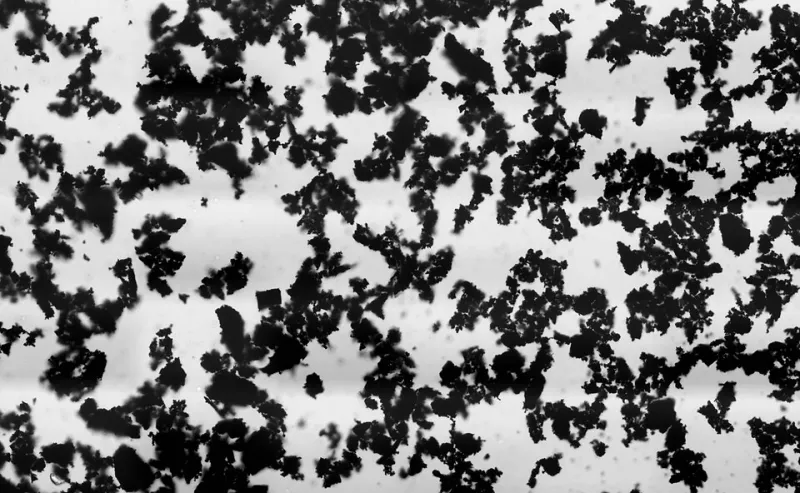
Photo: Zephyris, CC BY-SA 3.0, via Wikimedia Commons
PFAS compounds have acquired the shorthand 'forever chemicals' because they resist degradation in the environment. For facilities managers, the phrase can sound distant from the plant room. It is not. PFAS can appear in groundwater, surface water, process water, firefighting runoff and discharges, and trace concentrations may be present even in otherwise compliant supplies. By 2026, the UK regulatory picture has become more demanding, and facilities teams are increasingly asked whether their water systems are exposed and what treatment would actually achieve.
The difficulty is that PFAS is not a single substance. It is a large family of fluorinated compounds with different chain lengths, mobility and treatability. A treatment option that performs well for one group may be less effective for another. That makes blanket claims unhelpful and site-specific testing essential.
Why PFAS has moved onto the facilities agenda
For most UK buildings connected to a public supply, the immediate priority remains the water undertaker's compliance with drinking water requirements. But facilities that abstract from boreholes, store water for process use, operate cooling systems, handle firefighting foams or discharge trade effluent may face a more direct question. PFAS can enter via contaminated groundwater, industrial raw materials, aqueous film-forming foams and landfill-derived leachate. Once present, conventional clarification and filtration may not remove the more mobile fractions.
The commercial pressure is also changing. Insurers, auditors, ESG teams and planning conditions may ask for evidence of contamination or treatment performance. A site that cannot answer basic questions about PFAS risk may find itself at a disadvantage during due diligence or incident response.
What UK regulation is doing
The UK position is evolving rather than settled. The Drinking Water Inspectorate has taken an active interest in PFAS in drinking water, while the Environment Agency has increased monitoring and information requests in relevant contexts. UK REACH provides a route for restricting certain substances, and several PFAS-related restrictions and voluntary actions have been developing in recent years. For facilities managers, the practical message is to expect more requests for monitoring data, more scrutiny of discharges and a greater emphasis on source control.
This does not mean every site needs a PFAS treatment plant. It does mean that assumptions should be documented. If a site is in a sensitive catchment, abstracts groundwater or uses foams, a specialist review is prudent.
Treatment options at a glance
Granular activated carbon is the most familiar adsorption option. It can be effective for many longer-chain PFAS and is relatively straightforward to integrate into existing treatment trains. Its weaknesses are equally important: competitive natural organic matter can reduce capacity, shorter-chain compounds may break through earlier, and spent media requires appropriate disposal. Media replacement frequency is driven by loading and breakthrough, not by a fixed calendar.
Ion-exchange resins, particularly anion-exchange media, can offer higher capacity for some shorter-chain PFAS and a smaller footprint than carbon in certain applications. Regeneration with brine is possible, but it produces a concentrated waste stream that must be managed. Resin performance can also be affected by competing anions such as sulfate and nitrate. As with carbon, pilot or bench testing is usually needed before full-scale commitment.
Reverse osmosis is highly effective at rejecting PFAS, but it is energy-intensive, produces a reject stream and requires pretreatment. For most facilities, it is unlikely to be the first choice for whole-building treatment unless there is a specific high-concentration problem or a need for very high-quality process water.
In practice, treatment trains are common. Pretreatment may protect carbon or resin from fouling, while a combination of adsorbents can target a broader range of compounds. The right configuration depends on the PFAS profile, background water chemistry, flow rate and discharge constraints.
Comparing maintenance burden
Carbon systems are mechanically simple but operationally demanding in other ways. Bed life can be shorter than expected, and breakthrough monitoring must be reliable. Changeouts create waste handling and disposal obligations. Ion exchange can reduce frequency of media replacement in some cases, but regeneration adds chemical storage, brine management and wastewater considerations. Reverse osmosis adds membrane cleaning, energy costs and concentrate management.
A useful comparison is not simply capital cost per litre. Facilities teams should ask about media life, regeneration or disposal routes, labour requirements, monitoring frequency, footprint, chemical safety and the consequence of downtime. A treatment option that looks cheaper at procurement can become expensive if it requires frequent intervention in a constrained plant room.
When specialist testing is worth commissioning
A standard water test is unlikely to answer a PFAS question. Targeted analysis by liquid chromatography with tandem mass spectrometry can identify individual compounds at low concentrations. Total fluorine or adsorbable organic fluorine methods can provide a broader screen, but they do not replace compound-specific data. The right approach depends on the purpose: baseline assessment, due diligence, discharge compliance, treatment design or incident investigation.
Testing is most valuable when it is tied to a decision. A borehole used for process water may need a baseline panel before treatment is designed. A site with a history of foam use may need soil and water sampling. A discharge consent review may require a different suite. Laboratories should be accredited for the relevant methods, and sampling must avoid cross-contamination from clothing, equipment or containers.
A sensible sequence for facilities teams
Start with a source and use review. Identify where water comes from, how it is stored and where it goes. Review historical activities that could have introduced PFAS. If risk remains plausible, commission a focused sampling programme. Use the results to decide whether source control, treatment or simply enhanced monitoring is appropriate. Document the rationale, because a decision not to treat is defensible only if it is based on evidence.
PFAS treatment is not a box-ticking exercise. It is a water-quality engineering decision with real maintenance consequences. For UK facilities in 2026, the most robust position is an informed one: understand the exposure, test where it matters and choose treatment only after the performance and operational burden have been properly assessed.