Proving the Source Before the Keys Change Hands: A Private Water Supply Audit
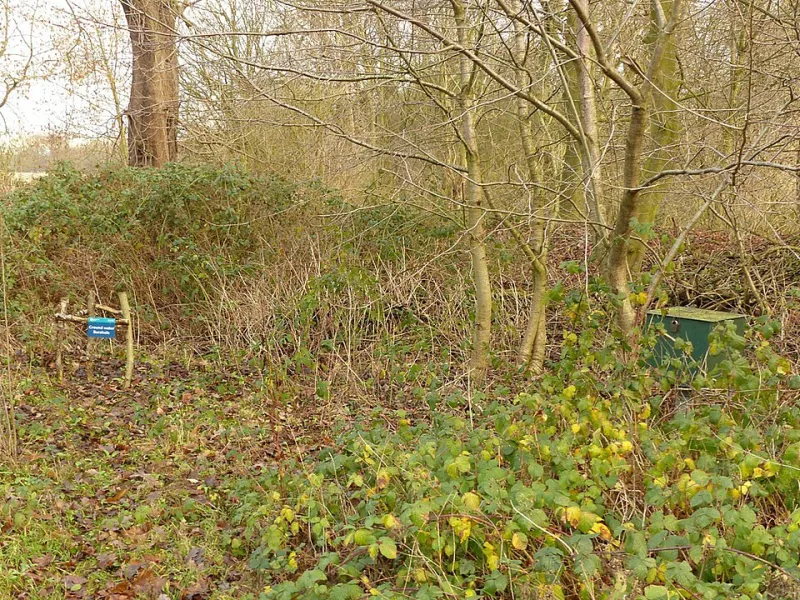
Photo: Alan Murray-Rust , CC BY-SA 2.0, via Wikimedia Commons
A borehole can look reassuringly simple from the plant room: a pump, a pressure vessel and a pipe disappearing into the floor. That simplicity is the trap. A private water supply is a small utility in its own right, with a source, a treatment train, an operating model and a compliance profile. When a facilities team inherits one at handover, or takes on a site where a private supply is proposed, the commercial and regulatory consequences of getting it wrong tend to surface after occupation, not before.
Private supplies are not confined to remote rural sites. Farms, estates, hotels, visitor centres, schools, workshops and mixed-use commercial premises can all depend on a borehole, spring or well. In some cases the supply is a legacy arrangement; in others it is introduced to reduce dependence on the public mains. Either way, the receiving team needs more than a yield figure and a set of as-built drawings. It needs evidence that the source, treatment and operating arrangements can be proved over time.
The supply is a small utility, not a tap
The first shift in thinking is to treat the private supply as infrastructure with its own risk register. Where the supply serves commercial or public premises, local authority private water supply duties are likely to apply, including risk assessment and monitoring arrangements. The precise regime depends on location and use, but the direction of travel is consistent across the UK: the responsible person needs to understand the source, control the risks and keep records.
That is difficult to do retrospectively. A pre-handover audit should therefore test four things: the source and its catchment, the treatment train and plant room, the sampling evidence, and the operating model that will keep the supply safe after the keys change hands.
Stage one: source and catchment evidence
Begin below ground and around the headworks. The borehole log, construction details, casing, grouting, headworks, apron and drainage should be reviewed together, not as separate documents. A borehole that is sound downhole but poorly sealed at the head can still be vulnerable to surface water, vermin or contaminated runoff.
Catchment risk matters as much as construction. Land use, nearby septic tanks, slurry storage, fuel tanks, drainage fields, yards and chemical storage should be mapped in relation to the source. For springs and wells, the pathway from surface water to the supply can be shorter and harder to see. Historical use of the site may also leave a legacy of nitrates, pesticides or other contaminants that a single sample will not reveal.
Yield and resilience belong in this stage too. A pump test or recovery test should be read alongside seasonal records where they exist. A source that performs adequately in a wet spring may behave very differently in a dry August or a freezing January. The audit should ask whether the supply has storage capacity, standby arrangements and an emergency plan that reflect the site's actual demand profile.
Stage two: treatment train and plant-room proof
Map the treatment train from source to point of use. Depending on the source risk, this may include prefiltration, disinfection, storage, softening, carbon filtration or other processes. The audit should confirm what each stage is intended to remove or control, how performance is monitored, and what happens when a stage fails.
Plant-room evidence is often weaker than the design intent. Duty and standby arrangements may exist on paper but not in practice. Alarms may be present but not routed to anyone who can respond. Bypasses may be poorly labelled or easily left open. Sampling points may not represent the water actually consumed. Cross-connections and backflow risks should be checked, particularly where the private supply coexists with a public mains supply or where irrigation, process water and potable water share a site.
A treatment train that cannot be operated, monitored and maintained by the receiving team is not a solution. It is a future non-conformance. The audit should include a walk-through with the people who will hold the maintenance budget and the emergency phone.
Stage three: sampling that stands up
A single clean sample is a snapshot. A proving period is evidence. Pre-handover sampling should be carried out by a UKAS-accredited laboratory, with parameters chosen from the source risk assessment rather than from a generic list. Microbiological indicators, metals, hardness, nitrate and other chemical parameters may all be relevant, depending on the catchment and the treatment train.
The sampling plan should cover raw water and treated water where possible, so that the performance of the treatment train can be distinguished from the quality of the source. It should also include the points that matter: kitchen taps, staff welfare facilities, process uses and any point where the supply enters a building. If disinfection is part of the train, residual monitoring and contact-time verification should be included.
A structured proving period of eight to twelve weeks is usually more informative than a hurried batch of samples before completion. It allows the receiving team to see how the supply behaves under normal demand, to test alarm response and to identify seasonal or operational variation. The output should be a handover pack: sample results, interpretation, maintenance records, alarm schedules and a clear statement of any conditions attached to occupation.
Stage four: operating model and resilience
Private supplies often improve resilience when they are properly maintained, because they reduce dependence on a single public mains feed. They can also reduce resilience when they introduce a single point of failure that no one has been trained to manage.
The audit should identify who is competent to operate the supply, what maintenance is required, which consumables and spares should be held, and how faults are escalated. Telemetry, where fitted, should be tested against the response model rather than simply installed. The emergency plan should cover pump failure, power loss, treatment failure, source contamination and loss of storage. For sites with vulnerable users or critical operations, the plan should be rehearsed before handover, not written after the first incident.
The commercial case for auditing early
Post-occupancy remediation is expensive in ways that are easy to underestimate. There is the direct cost of drilling, treatment upgrades or plant replacement, but there is also business interruption, temporary supply costs, reputational damage and the management time consumed by regulatory correspondence. A pre-handover audit is a modest line item by comparison, and it gives the buyer or tenant a basis for negotiation.
A useful audit ends with decision gates rather than a narrative report. The supply may be accepted as proved, accepted with conditions, required to be remediated before handover, or treated as a material risk that changes the commercial terms. That is a more honest outcome than a folder of drawings and a assurance that the borehole has always been fine.
For facilities teams, the question is not whether a private supply is inherently risky. It is whether the risk has been identified, controlled and proved. A borehole that has been audited before handover is an asset with a known operating model. One that has not is a liability waiting for the first busy week.