Before the Residual Reads Strange: A Chloramine Conversion Readiness File for UK Estates

Photo: Rhododendrites, CC BY-SA 4.0, via Wikimedia Commons
A different disinfectant, not a different emergency
Water companies in the UK periodically review how they disinfect treated water. In some zones, free chlorine is being supplemented or replaced by chloramine, usually monochloramine. The change is deliberate: chloramine persists longer in distribution, produces fewer trihalomethanes and can help suppliers meet tightening water-quality standards. For a facilities team, however, the switch can arrive as a set of small inconsistencies rather than a formal notice. The tap water tastes faintly of a swimming pool. A downstream chlorine reading falls while the supply is still clearly disinfected. Biofilm in a dead leg stops responding to the usual shock dose.
As 2026 progresses, conversion programmes continue across parts of the UK network. Not every site will be affected, and not every affected site will notice immediately. The sensible response is neither alarm nor indifference. It is a short readiness file that tells the plant room what to test, what to ask the wholesaler and what to tell occupants before the first complaint is logged.
Why a zone switch lands quietly
Chloramine is a weaker oxidant than free chlorine, but it is more persistent. That combination changes the practical behaviour of water in a building. Free chlorine is familiar and relatively easy to measure; chloramine requires a total-chlorine measurement, or a monochloramine-specific method, to see the residual that actually matters. A facilities team still logging only free chlorine can therefore record a low number and conclude that disinfection has failed, when the supply has simply changed chemistry.
The first signals are often sensory. Occupants report a chlorinous or pool-like taste, particularly from a freshly drawn glass rather than a chilled dispenser. Others may notice odour in washrooms or from hot-water outlets. In older estates, the more serious signals may be analytical: a change in lead results, unexpected ammonia in a sample, or persistent nitrification in warm, stagnant pipework. None of these should be diagnosed from a single reading. They should trigger a review of the sample-point register and a conversation with the water wholesaler.
The test that tells the whole story
For chloraminated supplies, the familiar free-chlorine DPD result is only half the picture. DPD total chlorine measures free chlorine plus combined chlorine, and monochloramine is a combined chlorine species. A colorimeter or comparator that reports only free chlorine will understate the residual. Facilities teams should confirm with their wholesaler what residual range is expected at the boundary and what measurement method is appropriate for the zone.
In practice, that means updating the sampling standard operating procedure. Record both free and total chlorine at sentinel outlets, plant-room sample points and any location where treatment assets alter the water. Check that reagents are in date and that staff have been trained on the difference between the two tests. Where a laboratory is used, confirm that the requested analysis includes total chlorine or monochloramine, not just free chlorine. The aim is not to create a second bureaucracy of readings. It is to ensure that the number in the log book describes the disinfectant that is actually present.
What chloramine does to treatment assets
Softeners, reverse-osmosis membranes, carbon filters and lead pipework each respond differently to a chloramine supply. None of these responses is automatically dramatic, but each deserves a place in the readiness review.
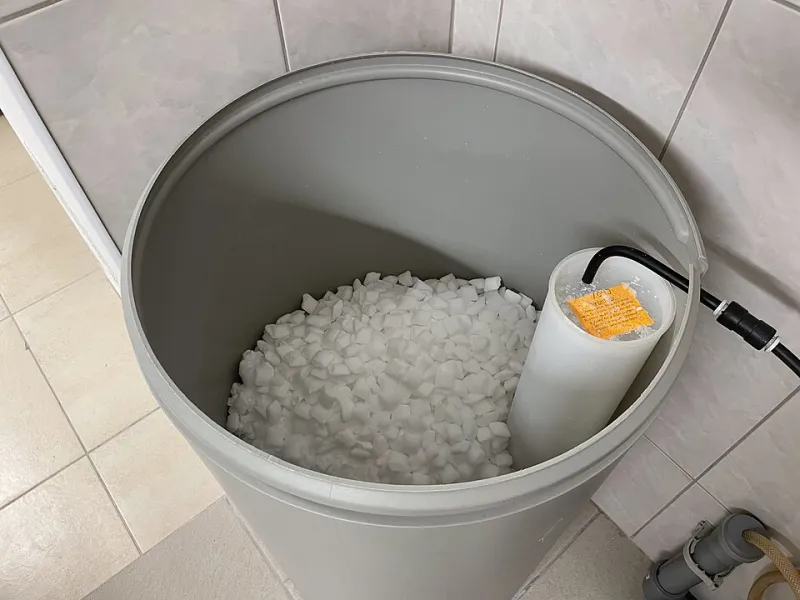
Ion-exchange softeners are not designed as disinfectant barriers, but their resins can be affected by oxidants over time. Chloramine is generally less aggressive than free chlorine to many resin types, yet manufacturers still specify limits and facilities teams should check resin condition, brine quality and any signs of organic fouling. A softener that was already tired may become harder to justify once the supply chemistry changes.
Reverse-osmosis membranes need particular attention. Polyamide membranes are sensitive to oxidants, and although chloramine is often considered less damaging than free chlorine, it is not harmless. Membrane manufacturers publish tolerance limits and dechlorination requirements. A site that relies on carbon pretreatment to protect an RO skid should verify that the carbon is capable of chloramine removal and that it is being replaced on evidence, not habit.
Carbon filters are the asset most likely to be misunderstood. Granular activated carbon can remove chloramine, but its capacity is lower than for free chlorine and the removal mechanism can release ammonia as a by-product. That ammonia can feed nitrifying bacteria, especially in warm or stagnant sections of premise plumbing. Catalytic carbon or a longer empty-bed contact time may be needed. Spent carbon should not be left in service simply because the downstream chlorine test still reads zero.
Lead pipework is the most sensitive legacy issue. Chloramine can alter the chemistry of pipe scale and, in some circumstances, increase lead leaching from older plumbing. UK estates with lead communication pipes or internal lead runs should review their lead sampling and corrosion-control arrangements before a conversion, not after an unusual result. pH and alkalinity control may need to be confirmed with the wholesaler, and any lead result above the regulatory standard should be investigated through the proper water-quality channels.
Sampling adjustments for a chloraminated estate
A chloramine conversion is a good moment to reopen the sample-point register. Add total-chlorine testing to the routine at sentinel outlets, dead legs and after any carbon or softening stage. Identify where ammonia could accumulate and where nitrification could take hold. Include a lead sample from a suitable outlet if lead pipework is present or suspected. Record temperature and stagnation time alongside the chlorine result, because a chloraminated supply behaves differently in a warm, rarely used pipe than in a cold, flowing main.
The frequency of testing should reflect risk, not a blanket rule. A part-occupied office with long dead legs may need more frequent sentinel checks than a continuously occupied building with good turnover. The important discipline is consistency: the same points, the same method and the same recording format, so that a change can be seen rather than argued about.
Questions for the wholesaler
Before the switch reaches the building, the facilities team should seek written answers to a small set of questions. Is the site served by a chloraminated zone? What is the planned conversion date and is there a transition period? What residual range should be expected at the boundary? What sampling method does the wholesaler recommend? Are there known lead pipes in the area, and what advice is being given to customers? Who should receive taste and odour complaints, and what response time is promised?
These questions are not adversarial. Water companies generally prefer an informed facilities contact to a late complaint. A short email trail also gives the site a defensible record if a tenant or insurer asks why the water tastes different.
A short readiness checklist
- Confirm the zone status and conversion date with the wholesaler in writing, and diary a review before and after the switch.
- Update the sampling procedure to include free and total chlorine, or a monochloramine-specific method, and train staff on the difference.
- Check treatment assets against manufacturer limits: softener resin condition, RO membrane oxidant tolerance, carbon type and replacement evidence.
- Review lead pipework and lead sampling arrangements, especially in older buildings with internal lead runs.
- Adjust flushing and stagnation routines for dead legs, little-used outlets and seasonal occupancy.
- Brief tenants and building users in plain language: a temporary taste or odour is not automatically a safety emergency, but persistent issues should be reported through a named contact.
- Review the complaint log categories so that taste, odour, illness and discolouration are separated and can be trended.
Meeting the new supply with evidence
A chloramine conversion is not a crisis. It is a change in water chemistry that rewards preparation and punishes assumption. The plant room that tests total chlorine, maps its lead risk and speaks to its wholesaler before the switch will meet the new supply with evidence. The one that waits for the first complaint will spend longer explaining itself. In a UK facility, the difference between those two positions is usually a few hours of paperwork and a more honest sampling routine.