Readiness Is Not the Same as Water Quality: Fire Storage on UK Estates
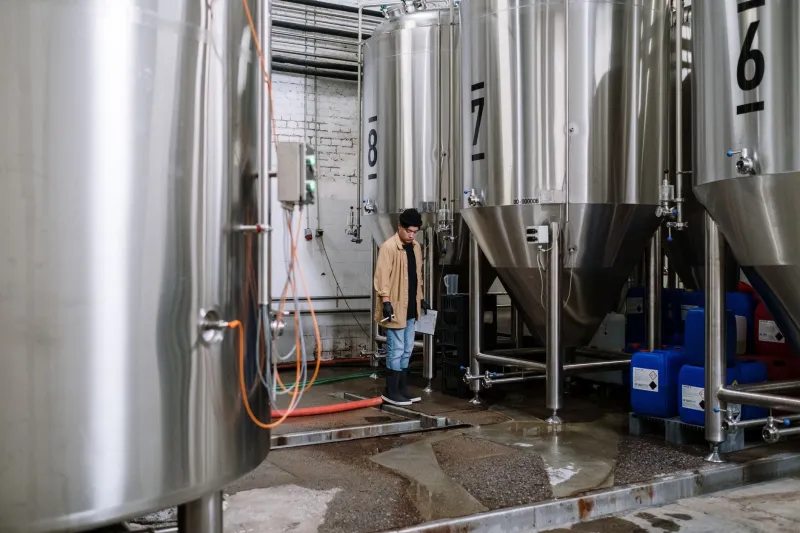
Fire water storage occupies an unusual position on a UK estate. It is life-safety infrastructure, not process water, and its first obligation is availability. Sprinkler tanks, wet risers and fire reservoirs are commissioned, pressure-tested and then expected to sit quietly until the day they are needed. That expectation is sound from a fire-engineering perspective. From a water-quality perspective, it is the beginning of a slow drift.
Idle water is not inert water. In a tank that turns over only during tests, sediment settles, biofilms establish on wetted surfaces and corrosion products accumulate. Clarity can fall, odour can develop and the tank interior can become a place where nobody has looked for years. None of this necessarily prevents the system from delivering water in a fire. But it creates a blind spot, and blind spots tend to be discovered at the least convenient moment.
Two regimes, one asset
Fire compliance and water-quality management have historically run on separate tracks. The fire regime checks levels, valves, pumps, pressure and alarms. The water regime checks sampling, treatment, cleanliness and turnover. Both are legitimate. Neither is sufficient on its own for a large storage asset that holds water for long periods.
The practical answer is not to turn a fire system into a water-treatment plant. It is to make the two regimes meet during routine inspections, maintenance planning and record-keeping. A facilities team that already attends the plant room for fire checks is ideally placed to notice a change in water condition at the same time. That observation costs little and adds a second layer of assurance.
What idle water does
In a sprinkler tank, a substantial proportion of the stored volume may never move except during a test or an actual fire. Thermal stratification can develop, with cooler, denser water at the base and warmer water near the surface. Sediment from make-up water settles on the tank floor. Corrosion products from steel surfaces, whether coated or not, gather in low points. Biofilm forms on walls and fittings, particularly where flow is minimal and temperatures are moderate.
The result is not usually a dramatic failure. It is a gradual loss of clarity and a growing reservoir of material that can be stirred into suspension when the system is called upon. Wet risers introduce a different pattern: long vertical legs of water that may see little movement between tests, with dead legs and branches where stagnation is more pronounced. Dry risers are dry by design and are not a stagnation problem in the same sense, but their drains, cabinets and inlet arrangements can still hide water where it should not be.
Observations during the fire walk-behind
The most efficient first step is to add water-quality observations to the existing fire inspection round. This is not a substitute for sampling or internal inspection. It is a way of catching change early.
At the tank, note the sight-glass clarity, the water level and any surface film or floating material. Look for sediment at the base if the tank has a visible sump or inspection window. Check that the lid, vents and overflow screens are intact and that the overflow is not discharging continuously, which may indicate a passing inlet valve. Record any change in colour or odour. At wet risers, note any signs of leakage or weeping at valves and check that drain valves are closed and not passing.
These observations should be recorded in the same log as the fire checks, not in a separate water file that nobody reads. The value lies in the trend, not the single entry.
Circulation without compromising fire duty
Controlled turnover is possible, but it must be designed around the fire duty rather than imposed on it. The objective is to move water through the tank and associated pipework in a way that refreshes the stored volume without reducing the fire reserve or introducing contamination.
One option is a planned test drain that draws from the tank and allows fresh make-up water to enter, provided the drain route and discharge arrangements are acceptable and the fire system remains available. Another is a small side-stream circulation loop that takes water from the tank, passes it through filtration and returns it via a diffuser, isolated from the fire duty by appropriate non-return arrangements. Any such loop must be designed by a competent person, agreed with the insurer and fire-system specialist, and arranged so that it cannot lower the water level below the required reserve or create a backflow path.
Aggressive circulation is counterproductive. Stirring sediment into suspension before a fire event can send dirty water into sprinkler pipework and strainers. Gentle, filtered turnover is preferable to vigorous mixing.
Filtration and treatment fit
Side-stream filtration is often the least disruptive intervention. A filter drawing from the tank and returning polished water can remove particulate matter, reduce sediment accumulation and improve clarity over time. The filter must be sized for the duty, constructed from compatible materials and positioned so that maintenance does not impair fire availability.
Chemical treatment deserves more caution. Corrosion inhibitors and biocides may have a role in some systems, but they must be compatible with the firefighting duty and accepted by the system designer and insurer. The default should be physical removal of sediment and control of corrosion through good tank condition, not a chemical programme added without a clear objective.
Sampling on a sensible schedule
Fire water is not drinking water, but it still benefits from a documented baseline. Sampling can include appearance, odour, pH, conductivity, iron, manganese and chloride, with microbial indicators where the risk assessment supports them. The schedule should reflect the asset history: annually for a stable tank, more frequently after cleaning, repair or a period of unusual stagnation.
Use an accredited laboratory and keep the results with the fire records. If the tank is cleaned or chlorinated, take a post-work sample and record the disposal route for any water discharged. Trade effluent consent may apply.
Cleaning, repair and the fire plan
Any internal work on a fire tank is a planned impairment of a life-safety system. It requires isolation, confined-space controls, temporary fire precautions and agreement with the insurer and fire risk assessor. Draining a tank without that plan is not maintenance; it is an unmanaged risk.
Cleaning removes sediment but can disturb biofilm. Chlorination may be appropriate, but neutralisation and disposal must be planned. Refill should be controlled to avoid air locks, and pumps, alarms and pressure switches should be re-commissioned and proved before the system is returned to service.
Records that join the dots
A single asset register, with fire checks and water observations in the same file, is more useful than two perfect but disconnected records. Recurring sediment in the tank and repeated strainer cleaning on the pump set are not separate issues; they are the same story told twice. A monthly review of both sets of records will reveal that story earlier than an annual audit.
The tank waits, as it must. It does not have to wait unobserved. Fire readiness and water quality are two lenses on the same asset, and a modest routine of observation, controlled turnover, filtration and sampling can keep both in focus without turning a life-safety system into an afterthought.