When the Main Runs Dry: A Priority-First Water Continuity Playbook for UK Estates
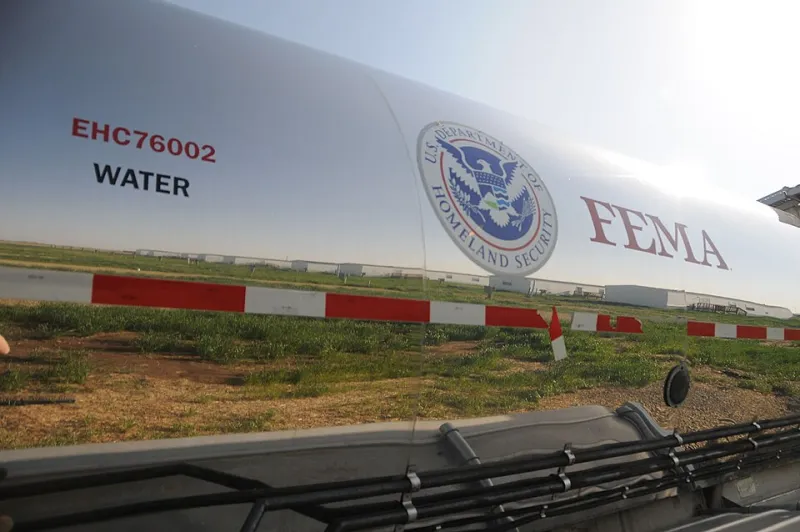
Photo: John Shea, Public domain, via Wikimedia Commons
A mains interruption is rarely convenient. It may be a planned shutdown for network repairs, a burst main that takes out a town centre, or a drought-related restriction that changes what a facility can use water for. In each case, the facilities team is asked to keep critical systems running while assuring occupants that the water they use is safe. The two aims can conflict. Stored water that sits too long, tankers connected without backflow protection, and filters installed as an afterthought can create a water-safety incident in the middle of a supply emergency.
This playbook is deliberately priority-led. It starts with what the site cannot do without, then works back to storage, treatment, testing and communication. It is not a substitute for a site-specific risk assessment, but it gives facilities teams a structure to rehearse before the main runs dry.
1. Map priority water uses before an incident
Build a water-use register while the supply is normal. List every significant use: drinking and catering, sanitary facilities, clinical or laboratory processes, cooling towers and boiler make-up, cleaning, irrigation, fire suppression and any process that cannot tolerate interruption. For each, record the daily demand, the minimum flow rate, the quality standard and the consequence of losing it for one hour, one day and three days.
Rank the uses in three bands. Critical uses are those where loss creates an immediate safety, health or regulatory problem. Essential uses can be reduced for a short period but must be restored quickly. Deferrable uses can be shut down. The register should also identify which uses can accept non-potable water. Toilet flushing, external cleaning and some process uses may be able to run from a recovered or tankered supply; drinking, catering and clinical use cannot.
The register is the basis for every later decision. Without it, storage is sized by guesswork and tankers arrive without a clear destination.
2. Size and protect stored water
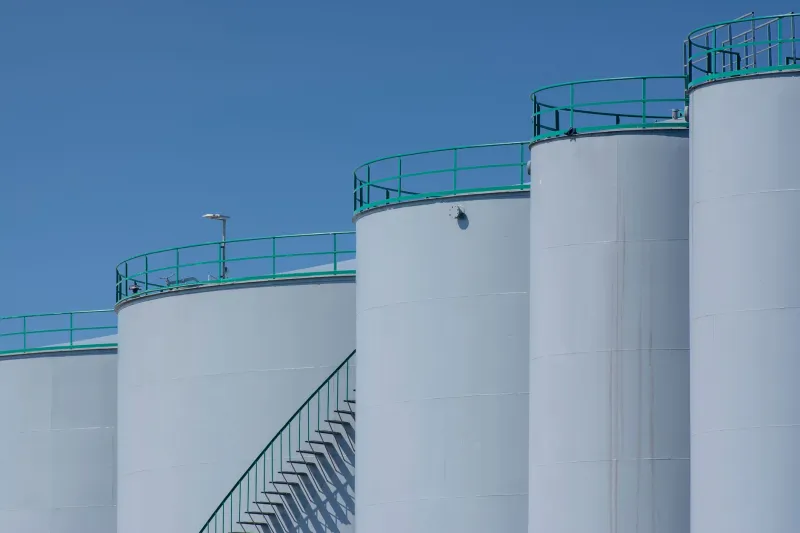
Stored water is the first line of resilience, but more storage is not automatically better. Oversized tanks increase stagnation, weaken disinfectant residuals and make temperature control harder. A common starting point is 24 to 72 hours of critical and essential demand, adjusted for the site’s ability to reduce occupancy or bring in alternative supplies. The calculation should include peak demand, not just average daily use.
Tanks should be clean, covered, insulated and vermin-proof. Cold-water storage should be kept below 20°C where practicable, and hot-water systems should continue to meet the temperature regime set out in HSG274 and the L8 approved code of practice. Level monitoring should be visible to the facilities team, and low-level alarms should be tested. Where a tank has a mains top-up, the inlet must be protected by an air gap or other backflow arrangement appropriate to the risk.
Plan for turnover. If a tank is normally kept full, a periodic exercise or controlled draw-off can keep the water moving. During an interruption, use the stored water in a planned sequence rather than draining the most critical tank first. Keep non-potable storage separate and clearly labeled.
3. Specify filtration and treatment for alternative supplies
Alternative supplies arrive in different forms: tankers, bowsers, bottled water, or occasionally an on-site borehole. Each has a different risk profile. A potable tanker should arrive with a certificate of cleaning and disinfection and a water-quality result. Hoses must be food-grade and dedicated. Bowsers need cleaning, covering and chlorination before use. Bottled water is simple for drinking but impractical for larger sanitary or process demands.
Treatment should be matched to the source and the end use. A typical temporary train for a tankered potable supply might include sediment filtration, activated carbon for taste and organics, and a chlorine residual or UV barrier. For a non-potable supply used for washdown, a lower specification may be acceptable, but the risk assessment must justify it. Filtration alone does not make water potable. The system needs a disinfection step, a residual monitor and a sampling point after treatment.
Connections are the highest-risk moment. Never connect an alternative supply to the mains network without an air gap or a verified backflow prevention arrangement. Temporary pipework should be pressure-tested, labeled and walked before use. Pumps and filters should be sized for peak flow, with spare cartridges and a bypass that fails safe rather than allowing untreated water to pass.
4. Build a testing and communication routine
During an interruption, testing should be frequent enough to catch a problem before it reaches users. At minimum, check chlorine residual, pH, turbidity and temperature at the tank outlet and at representative outlets. Record tanker certificates and bowser cleaning records. Microbiological sampling should follow the site’s water-safety plan, with increased frequency for Legionella and indicator organisms after any change of source or period of stagnation.
Communication is part of the control system. Pre-agree contacts with the water company, the local authority, the health protection team and key suppliers. Have templates ready for occupants, tenants and contractors. People need to know which taps are potable, which are non-potable, where bottled water is available and whom to call if water looks or smells wrong. Signage should be in place before an incident, not improvised during one.
A single incident log should capture decisions, sample results, tanker deliveries and actions. It will support the post-incident review and any regulatory questions.
5. Rehearse, review and update
A plan that has never been exercised is only a document. Run a tabletop exercise each year with facilities, water safety, procurement and communications. Test the physical connections, confirm tanker access and parking, check pump power supplies and verify that spare filters and disinfectant are in date. After any real interruption, review what worked and what did not, then update the register, the storage calculation and the contact list.
UK facilities do not need to predict every failure mode. They need a priority-led plan that keeps critical water safe, makes best use of stored water and brings in alternative supplies without creating a cross-connection or a stagnation problem. That is resilience in practice.