Where Hardness Costs Hide: A Facility-Zone Guide to Scale Control
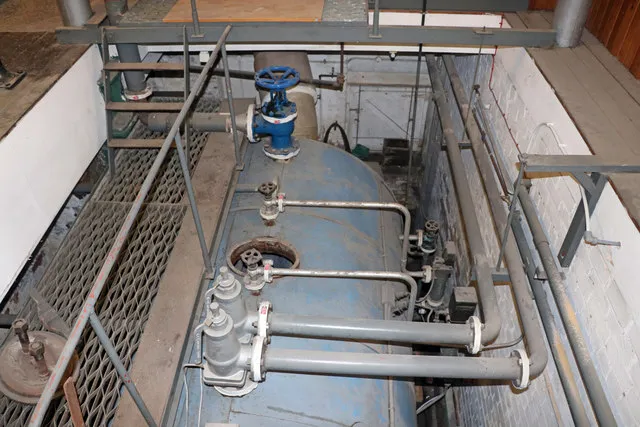
Photo: Chris Allen , CC BY-SA 2.0, via Wikimedia Commons
Hard water is a budget issue before it is an equipment issue. In 2026, UK facilities teams are being asked to defend every recurring cost while keeping boilers, calorifiers, cooling systems and washrooms reliable. Water hardness complicates that task because it is regional, seasonal and highly dependent on where heat and flow meet the water. A blanket softener specification can over-treat a soft-water site and under-protect a hard-water plant room.
Water hardness in England and Wales follows geology. Chalk and limestone aquifers in the south and east, including parts of the Thames, Southern and Anglian water regions, tend to produce harder supplies, while much of Scotland and parts of Wales and northern England are softer. The differences matter. Scale forms where hardness minerals become unstable, particularly at hot surfaces, so the same water can be benign in a cold storage tank and expensive in a calorifier.
Begin with a water balance, not a catalogue
A credible scale-control decision starts with measurement. Record hardness, alkalinity, silica, chloride, flow, temperature and operating hours at each significant use point. Add the maintenance history: descaling frequency, heat-exchanger efficiency, pump pressure, detergent consumption and washroom complaints. This turns a vague concern about hard water into a site-specific cost profile.
The aim is not to treat all water to the same standard. It is to protect the assets where scale has a measurable financial or operational consequence, and to avoid treatment where the risk is low. That distinction is especially important for facilities with mixed uses, such as a hard-water site with a soft-water kitchen supply or a building with only modest domestic hot water demand.
The technology menu, judged on whole-life terms
Salt-based softening remains the reference technology for high-risk hot-water and steam applications. Base-exchange softeners remove calcium and magnesium and are predictable when sized, commissioned and maintained correctly. They carry salt deliveries, regeneration water, resin maintenance and chloride loading to the drain. On hard-water sites with high hot-water demand, the energy and maintenance savings can be substantial, but the environmental trade-offs should be explicit rather than hidden in the service charge.
Template-assisted crystallisation, often described as TAC, uses a medium to encourage scale to form on suspended templates rather than on heat-exchange surfaces. It avoids salt and regeneration, has low operating complexity and can suit moderate-hardness applications where full softening is disproportionate. It is not a like-for-like substitute for base-exchange softening in high-pressure steam or very hard, high-temperature duty. Performance depends on correct sizing and on the stability of the water quality.
Magnetic and electronic devices are inexpensive to buy and easy to fit, but the evidence base for hard-scale prevention is mixed. They should not be treated as primary protection for boilers, calorifiers or cooling systems where scale carries real risk. At most, they may have a supplementary role in low-risk domestic applications, and only where monitoring confirms benefit.
Scale-inhibiting media, including phosphate and polymeric inhibitors, can be effective at low dose and are often used in domestic hot-water and cooling make-up duties. They require controlled dosing, regular replenishment and an understanding of discharge implications. Overdosing wastes chemical and can create other problems; underdosing gives a false sense of protection. These products are best applied where the risk is moderate and the maintenance regime is reliable.
Where filtration and softening actually pay back
Boilers and steam systems offer the clearest case where hard water is present. Even thin deposits on heat-transfer surfaces increase fuel or electrical demand, raise flue temperatures and stress tubes. The payback comes from efficiency, reliability and asset life rather than from water treatment alone. Softening or appropriate chemical conditioning should be supported by blowdown control, water-quality testing and a boiler-specific risk review.
Calorifiers and domestic hot-water systems are the next most common candidate. Scale reduces recovery rates, blocks secondary circuits and shortens cylinder life. In hard-water areas, point-of-use or central softening can reduce descaling and maintenance. The environmental case depends on salt use and regeneration frequency, so softeners should be metered and reviewed rather than left on a fixed timer.
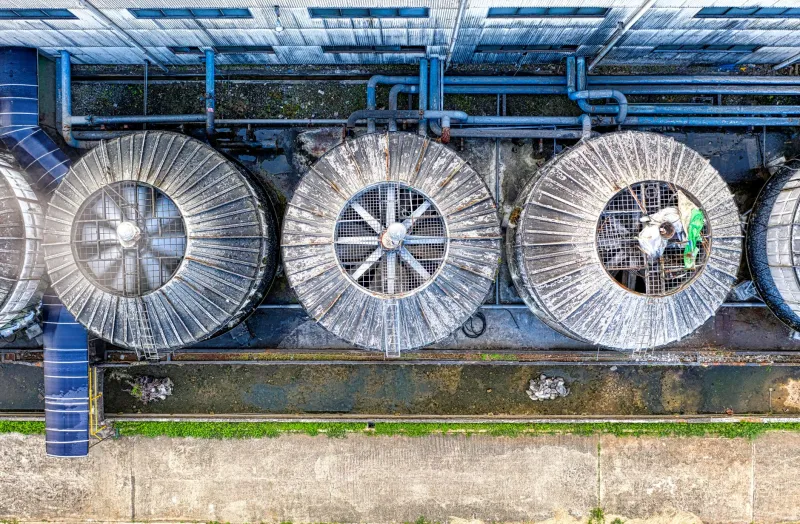
Cooling systems need a different lens. Scale on condenser tubes reduces heat transfer and can force higher fan or pump energy, while poor control of cycles of concentration can waste water. Here, scale inhibition, side-stream filtration and conductivity-based blowdown control often work together. Softening make-up water may be justified in hard-water areas, but it is not automatically the best first step.
Washrooms and kitchen equipment are lower-risk but highly visible. Scale on taps, showers, aerators and dishwashers increases cleaning effort and detergent use, and can shorten equipment life. Point-of-use conditioners or small softeners can be justified in hard-water sites with high footfall, but the case is weaker where water is soft or demand is intermittent.
A room-by-room decision checklist
- Plant room boilers: What is the hardness and alkalinity of the make-up water? Is there a boiler water-quality regime? What is the cost of current descaling and efficiency loss?
- Calorifiers and hot-water cylinders: How often are heat exchangers descaled? Is the softener metered? Are there signs of reduced recovery or blocked fittings?
- Cooling towers and evaporative condensers: Are cycles of concentration controlled by conductivity? Is scale visible on fill or heat exchangers? Would softener or inhibitor be the simpler solution?
- Washrooms: Are scale complaints concentrated in hard-water areas? Is cleaning frequency rising? Would point-of-use treatment solve a local problem more cheaply than central softening?
- Kitchens and laundry: What is the equipment warranty position? Are detergent and maintenance costs tracked? Is the water used hot or cold?
- Laboratories and specialist equipment: Does the manufacturer specify hardness limits? Is pretreatment already present?
Commissioning and review
Scale control fails quietly when it is installed and forgotten. Commissioning should include baseline water analysis, confirmation of flow and pressure, and a clear maintenance schedule. Ongoing monitoring should cover hardness, salt consumption, regeneration frequency, pressure drop and energy use. For softeners, check resin condition and disinfect according to the site risk assessment. For inhibitors, verify dose and stock control. For physical devices, insist on evidence that the claimed benefit is actually being achieved.
The most defensible 2026 approach is targeted rather than universal. Protect the assets where scale has a measurable cost, choose the simplest technology that controls the risk, and review the environmental trade-offs alongside the financial ones. Hard water does not have to mean harder budgets, but it does require a facility-zone plan rather than a single plant-room purchase.