The Unseen Return Path: Charting RPZ Valves and Air Gaps Across a UK Estate

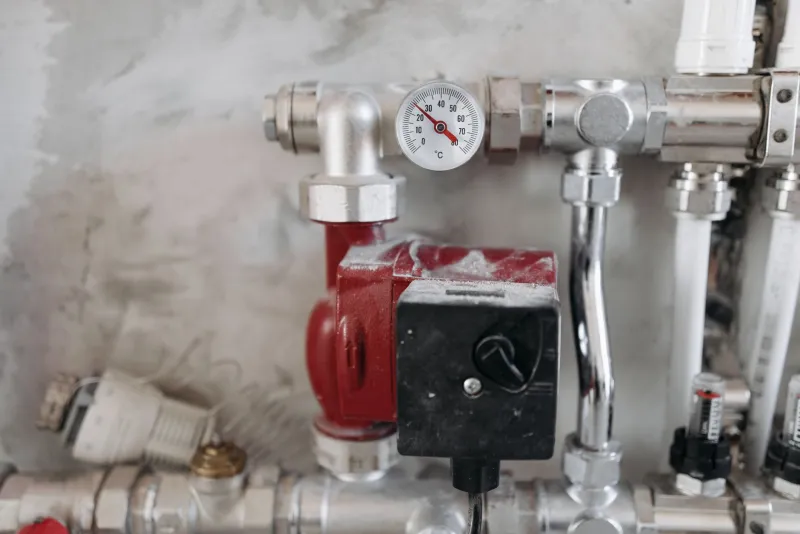
Photo: UK facilities manager inspecting tagged RPZ backflow prevention valve in plant room, via upload.wikimedia.org
Backflow is rarely the result of a single fitting failing in isolation. More often it is the quiet consequence of an alteration, a temporary hose connection or a poorly labelled branch that has not been revisited since commissioning. On a UK estate with multiple buildings, plant rooms and tenancies, the greater risk is not simply that cross-connections exist. It is that the organisation cannot demonstrate where they are, what protects them and when that protection was last proved.
A backflow prevention register should therefore be treated as an operational map rather than a compliance artefact. It needs to be built from the site plan outwards, checked against what is actually installed, and maintained as a live document instead of a file assembled shortly before an audit.
Read the site from the supply inwards
Begin at the incoming supply and work downstream. Mark every point where water can leave the potable system and potentially return. This includes permanent connections as well as temporary ones, because a washdown point with a loose hose can present a more immediate pathway than a fixed appliance that has been properly protected for years.
The walk-through should cover plant rooms, kitchens, laboratories, laundries, cleaning cupboards, external taps, irrigation cabinets, vehicle washdown areas and any tenant-owned equipment connected to the estate supply. It should also include fire-fighting storage and cooling systems where there is a legitimate concern about stagnation or chemical addition. The purpose is not to catalogue every tap. It is to identify the boundary points where the quality of the water could be compromised if pressure conditions changed.
For each point, record the asset identifier, location, downstream use, protection type, make, model, size and serial number where visible. Note whether the device is a reduced pressure zone valve, a double check valve, a single check valve or a physical air gap. The Fluid Categories used in UK water fittings risk assessment provide a useful way to frame the conversation, but the practical value lies in matching the category to the actual use and the actual installation.
Prioritise the connections that can carry the greatest load
Not every connection deserves the same attention. Three groups should normally rise to the top of the programme because they combine frequent use, chemical risk or a realistic route for contamination.
Washdown points are an obvious starting point. They are often used with hoses that can be left submerged in drains, tanks or dirty water. A fixed air gap or an appropriate mechanical protection device should be verified, and the point should be labelled so that cleaners and contractors know what is permitted.
Chemical dosing lines warrant close scrutiny because a loss of pressure or a faulty injector can create a direct pathway between a treatment chemical and the potable supply. The audit should confirm that the dosing arrangement includes the intended physical separation or mechanical backflow protection, that injection points are clearly marked, and that any change to the dosing regime has been reflected in the register.
Irrigation supplies present a similar challenge, particularly on estates with landscaped grounds, playing surfaces or glasshouses. Subsurface irrigation, fertigation equipment and temporary standpipes can all create cross-connections that are easy to overlook in winter and difficult to trace in summer. Where an air gap is used, its physical clearance should be visible and unobstructed. Where an RPZ valve is installed, the discharge arrangement and the condition of the relief port should be checked as part of the same visit.
Tag the asset, then prove the asset
A register is only useful if a person standing in front of the device can match it to the record. Adopt a simple tagging convention and use it consistently across the estate. A durable asset tag with a short identifier, a QR code linked to the register and a plain-language description of the downstream use will do more for maintenance than a lengthy spreadsheet with no physical counterpart.
The site map should show the tag location, the protected connection and the direction of flow. Where a device serves a tenanted area, record the boundary of responsibility. This is particularly important in multi-let offices and mixed-use estates, where a landlord may maintain the incoming supply while a tenant controls the equipment downstream.
Testing should be carried out by a competent person using the manufacturer's procedure and calibrated equipment. RPZ valves will normally require annual testing, with the results, gauge readings and any remedial work recorded against the asset. Air gaps require a visual inspection of the physical separation, the condition of the receiving vessel and the absence of obstructions. A dated photograph is a practical addition to the record, particularly where the air gap is external or accessible to contractors.
Build an annual rhythm around evidence
A realistic annual cycle begins with a desk review of the register, followed by a site verification walk and then the testing programme. Schedule high-risk connections first, then group the remaining devices by building or plant room to reduce travel and disruption. Keep a small contingency for re-tests, because a failed RPZ valve or a disturbed air gap should be closed out promptly rather than carried forward to the next financial year.
The records should be consistent enough to answer three questions without a site visit: what protects this connection, when was it last tested, and what happened when it failed. Retain test certificates, photographs, asset tags and remedial notes for as long as the device remains in service, and for any additional period required by the water undertaker or the organisation's own retention policy.
Keep the map alive through change control
The most common weakness in a backflow register is not the initial audit. It is the alteration that never reaches the document. A new washdown tap, a replacement dosing skid, a tenant fit-out or a temporary irrigation connection can all change the return path without changing the building's overall water layout.
Make the register part of the permit-to-work and commissioning process. Any new connection to the potable supply should trigger a review of the protection type, a tag update and an entry in the testing schedule. When a device is removed, record the removal rather than simply deleting the line. The history matters when the next alteration is planned.
A well-maintained map of RPZ valves and air gaps does not eliminate backflow risk. It does, however, turn an invisible network into a managed one. For UK facilities teams, that is the difference between reacting to a contamination incident and being able to show, with evidence, that the return path was understood before it became a problem.